



Cable Trays, Trunking & Ladders: Comparison, Buying Guide
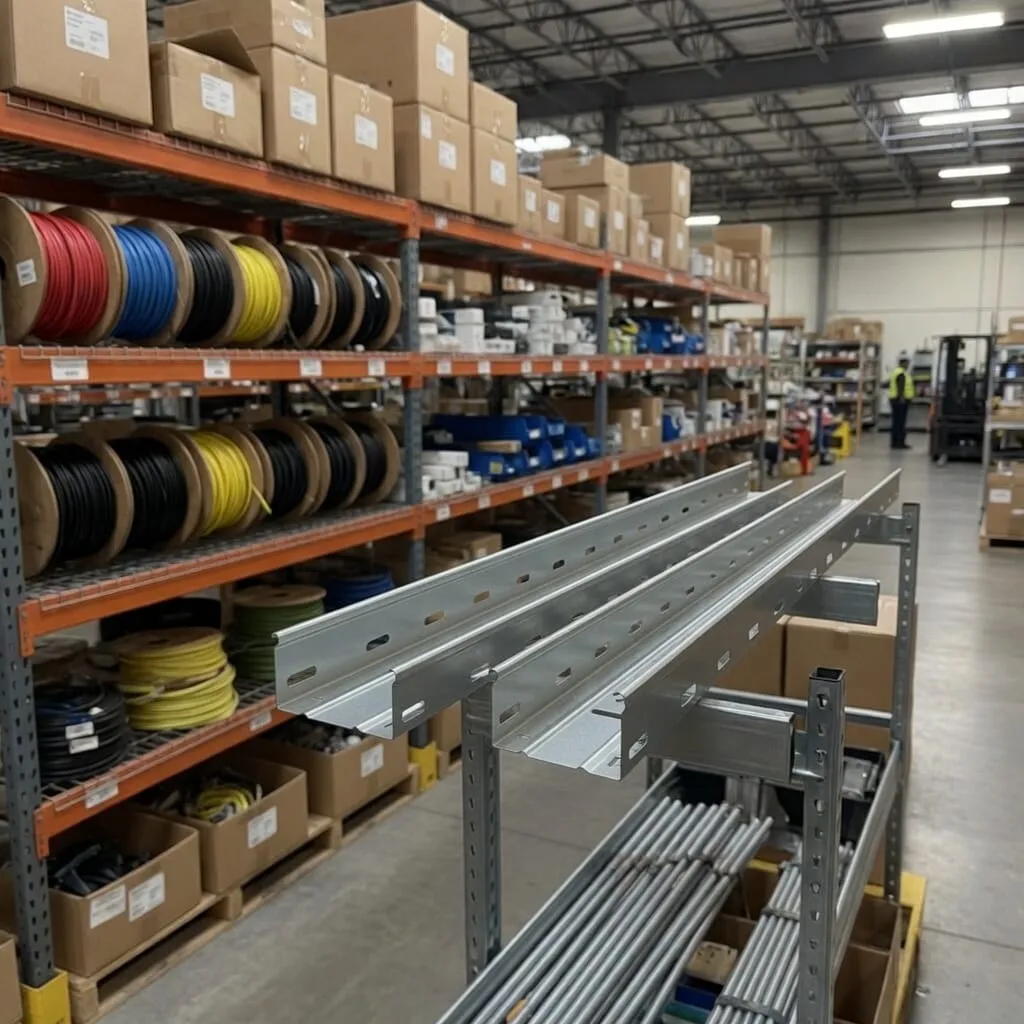
In modern electrical installations, cable trays, cable trunking systems, and cable ladders are essential support systems for the safe, organized, and standards-compliant routing of power, data, and control cables. Whether in industrial halls, office buildings, data centers, or outdoor environments, these systems ensure optimal cable fill, excellent ventilation, easy maintenance, and high mechanical strength.
In this comprehensive guide, we explain the exact definitions, key differences, suitable materials, mounting methods, and selection criteria. As a leading supplier of installation materials, ekabel24 offers a complete range of cable trays, accessories, and system solutions – from simple hangers to complex crossings.
What Are Cable Trays, Cable Trunking, and Cable Ladders?
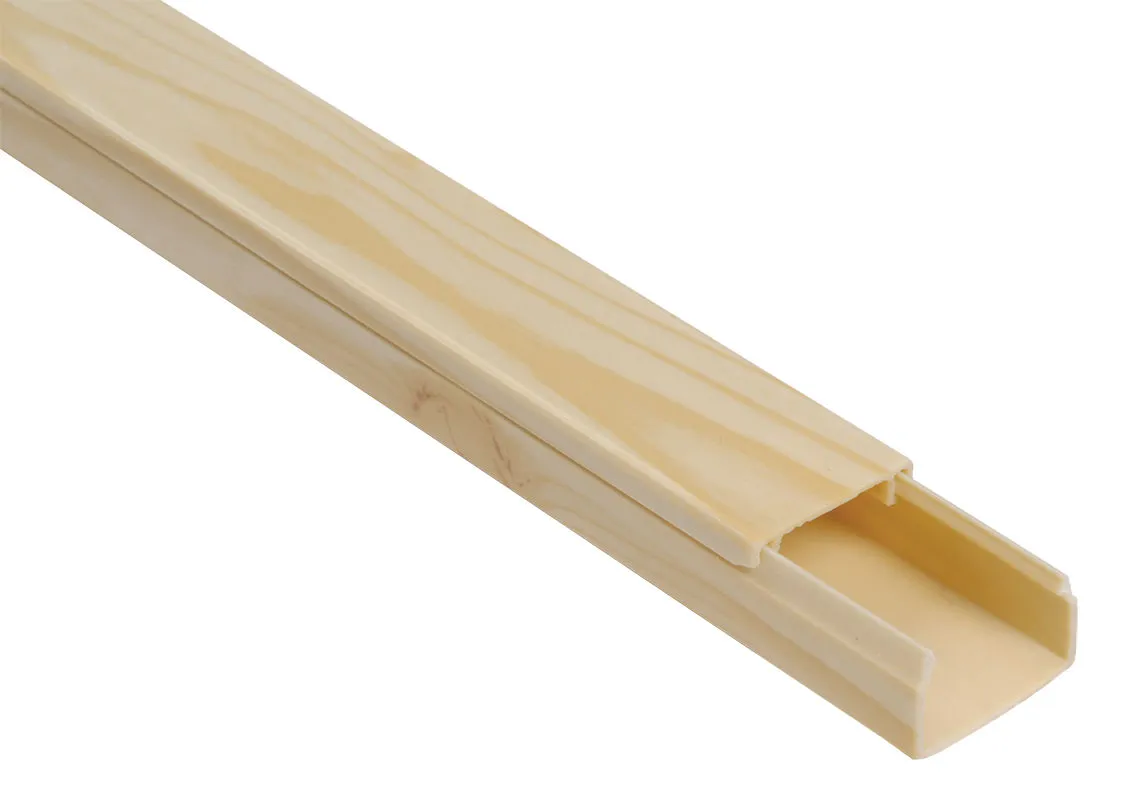
Cable trays (also known as cable channels or trunking) are U-shaped or box-shaped systems made of sheet metal or plastic with a continuous base (perforated or solid). They protect cables from mechanical damage and enable neat, orderly installation.
Cable trunking systems usually refer to the complete support infrastructure, including all fittings and fixings. The term is often used interchangeably with cable trays but emphasizes the full routing path.
Cable ladders (also called cable ladders or mesh trays) consist of two longitudinal side rails with transverse rungs. They provide maximum ventilation, very high load capacity, and are ideal for heavy or high volumes of cables.
All systems comply with the international standard DIN EN 61537 (Cable tray systems and cable ladder systems – Requirements and tests).
Cable Tray vs. Cable Ladder vs. Cable Trunking – Direct Comparison
| Type | Design | Ventilation | Load Capacity | Typical Applications | Advantages |
|---|---|---|---|---|---|
| Cable Tray | U-shaped metal/plastic channel with base | Medium to good (depending on perforation) | Medium to high | Industry, commercial, ceiling & wall mounting | Good protection, easy cable laying, wide range of fittings |
| Cable Trunking System | Complete routing system (often synonymous with tray) | Good | Medium to high | Building installations, full route planning | High flexibility with accessories, standards-compliant design |
| Cable Ladder | Ladder system with side rails & rungs | Excellent | Very high | Heavy-duty areas, industry, machinery | Maximum cooling, low weight, easy access |
The main difference between cable tray vs. cable ladder lies in design and load-bearing capability. Cable trays form more enclosed channels, while cable ladders are open systems designed for the highest demands.
Materials for Cable Trays and Ladders
The choice of material determines corrosion resistance, weight, cost, and application area:
- Hot-dip galvanized steel – Standard for indoor and protected outdoor use, high strength.
- Powder-coated or painted steel – Attractive appearance with extra corrosion protection (e.g., black or white).
- Stainless steel (VA / AISI 304/316) – Perfect for aggressive environments, food industry, marine, or high-humidity outdoor areas.
- Aluminium – Lightweight, corrosion-resistant, good conductivity.
- Plastic / halogen-free plastic (PVC, GRP) – Corrosion-free, electrically insulating, suitable for damp or chemically aggressive areas.
At ekabel24 you will find both metal cable trays with covers and plastic variants.
Application Areas
Cable trays, trunking, and ladders are used in:
- Industrial and production halls
- Office and administrative buildings
- Data centers and server rooms
- Hospitals and laboratories
- Outdoor installations, rooftops, trapezoidal roofs
- Shipbuilding and vehicle technology (special marine and heavy-duty versions)
They offer maximum flexibility for ceiling, wall, or floor mounting and are easy to retrofit.
Buying Guide: How to Choose the Right Cable Tray or Ladder
Consider these key criteria when selecting:
- Dimensions – Width and height (e.g., 100x60 mm, 200x100 mm, 400x100 mm) depending on cable quantity and fill factor.
- Load Capacity & Fill – Maximum fill approx. 50% of height; always calculate total cable weight per meter.
- Environmental Conditions – Indoor/outdoor, humidity, chemicals, temperature.
- Mounting Type – Ceiling, wall, floor, suspended, or walkable.
- Accessories Needed – Covers, connectors, bends, T-pieces, crossings.
Always plan with reserve capacity for future expansions. For complex projects, consult a qualified electrical planner.
Installation and Accessories
Correct fixing is crucial for stability and longevity. ekabel24 offers matching accessories for every mounting method:
- Hanging rods / threaded rods – For ceiling and suspended installations
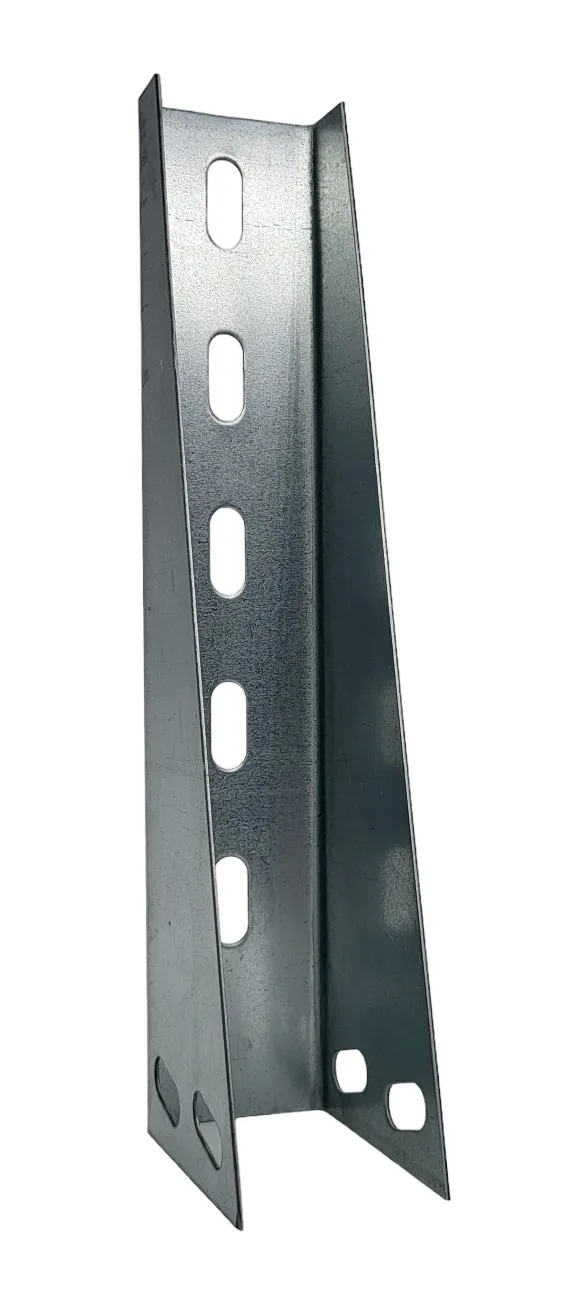
- Wall brackets – For wall mounting
- Connectors – For secure longitudinal joints
- 90° Bends – For direction changes
- T-Pieces – For branches
- Crossings – For complex intersections
- Cable trays with covers – For extra protection and a clean look
All components are perfectly coordinated for fast, professional installation.
Comparison Table: Cable Tray Systems at a Glance
| Criterion | Cable Tray (Metal/Plastic) | Cable Trunking System | Cable Ladder |
|---|---|---|---|
| Protection from dirt | High | High | Medium |
| Ventilation / Cooling | Medium | Medium | Very high |
| Weight | Medium | Medium | Low |
| Load Capacity | Medium to high | Medium to high | Very high |
| Price-Performance | Very good | Good | Good for heavy loads |
| Typical Widths | 50–800 mm | 50–800 mm | 100–600 mm |
Frequently Asked Questions (FAQ)
What is the difference between a cable tray and cable trunking?
A cable tray usually refers to the individual U-shaped channel, while cable trunking describes the complete system including fittings and fixings. The terms are often used interchangeably.
When is a cable ladder better than a cable tray?
Cable ladders are preferable for very high loads, large numbers of cables, or when excellent ventilation is required (e.g., in industrial plants).
Which material for outdoor cable trays?
Stainless steel or powder-coated/hot-dip galvanized steel with covers. Plastic is suitable for lower mechanical stress.
How do you correctly size and fill a cable tray?
Fill to a maximum of 50% of the height. Always consider total weight per meter and the permitted support span according to DIN EN 61537.
Cable tray with or without cover?
With cover for better protection against dust, dirt, and mechanical damage — especially recommended for ceiling mounting or accessible areas.
What mounting options exist?
Ceiling mounting with hanging rods, wall mounting with brackets, floor mounting, or suspended. All variants are available in the cable trays category.
Are cable trays suitable for outdoor use?
Yes — when using corrosion-resistant materials (stainless steel, galvanized with coating) and appropriate accessories.
Which standards must cable support systems meet?
The current standard DIN EN 61537 regulates mechanical properties, corrosion resistance, and electrical conductivity.
Can cable trays be used under plaster or in raised floors?
Yes, special flat or compact versions are suitable for concealed or raised-floor installations.
What accessories are needed for a complete system?
Connectors, 90° bends, T-pieces, crossings, covers, hanging rods, and wall brackets — all modular and compatible.
Conclusion
Whether you need classic cable trays with covers, robust cable ladders, or fully equipped cable trunking systems — choosing the right solution ensures safety, longevity, and easy maintenance for your electrical installation.
Discover the full range and all accessories directly in the shop: Browse Cable Trays
For individual advice or large projects, the ekabel24 team is happy to help. Plan your next cable management system professionally and in compliance with standards.