




Surge Arrester
Buy at B2B prices
0% VAT for EU business customers.
Subscribe to the newsletter to receive the latest discount codes.


5% discount for orders over €5000
Subscribe to the newsletter to receive the latest discount codes.Free shipping to Germany
for orders over €500
Free shipping to Austria, Belgium and Netherlands
for orders over €1000
Surge Protection Devices (SPD): Professional Surge Arresters for Lightning and Overvoltage Protection
Surge protection devices (SPDs), also known as surge arresters or transient voltage surge suppressors, are essential components in modern electrical installations. They safely divert dangerous overvoltages caused by lightning strikes, utility switching operations, or other transients to ground, limiting the voltage to a safe level for connected equipment. High-quality SPDs help electrical contractors, construction companies, renovation firms, industrial plants, research centers, van conversion specialists, and professional electricians meet stringent safety standards such as IEC 61643-11 and national requirements.
How Surge Protection Devices Work
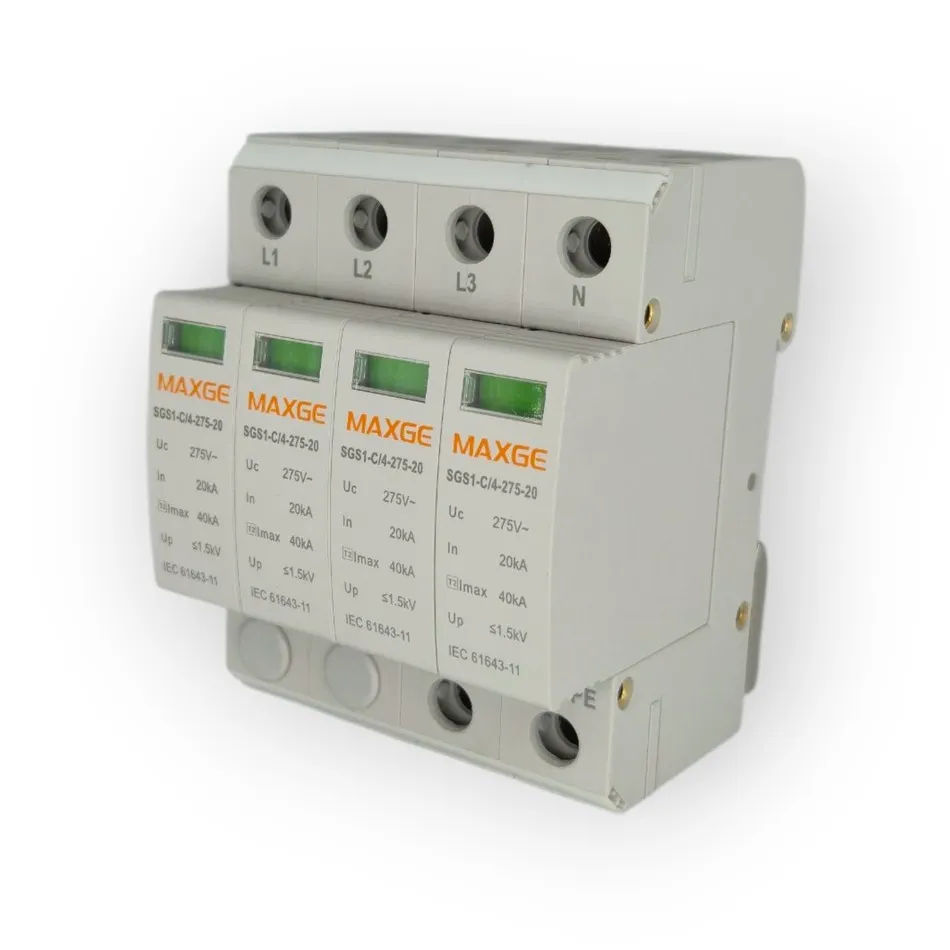
A surge protective device reacts within nanoseconds to voltage spikes and diverts the surge energy to earth. This rapid response prevents costly damage to machinery, control systems, IT infrastructure, sensitive measuring equipment, and other critical loads. Professional electricians value the modular DIN-rail mounting and clear status indicators that allow quick visual inspection and maintenance.
Types of Surge Protection Devices (SPD)
The right SPD type depends on the installation location and the expected surge risk:
- Type 1 SPD (Lightning Current Arrester): Handles very high impulse currents (10/350 µs waveform) and is installed at the main service entrance, especially in buildings with external lightning protection systems.
- Type 2 SPD: Protects against indirect lightning effects and switching surges (8/20 µs waveform). It is the most common choice for sub-distribution boards.
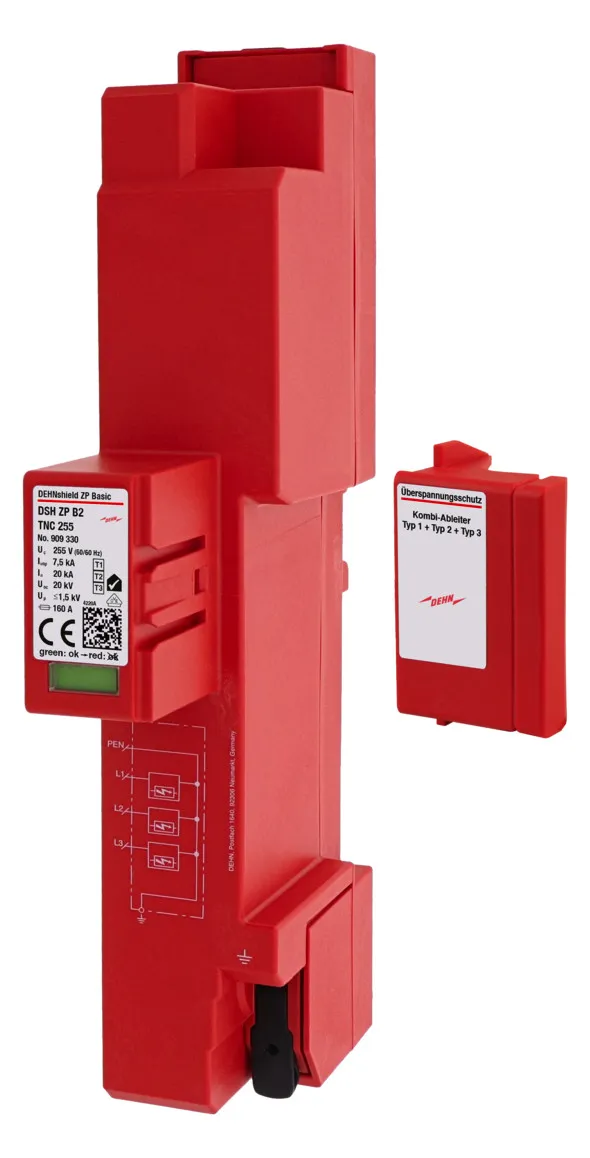
- Combined Type 1+2 SPD: Offers both high-energy lightning protection and surge limitation in a single compact unit, reducing installation time and space requirements.
- Type 3 SPD (Fine Protection): Provides additional point-of-use protection for highly sensitive end devices.
Applications of Surge Protection Devices
Surge arresters deliver reliable protection across many professional sectors and help ensure operational continuity, equipment longevity, and compliance with safety regulations:
- Electrical service companies and professional electricians: Essential for new installations, upgrades, and maintenance projects to deliver long-term system safety.
- Construction and renovation companies: Required to meet current electrical codes in new builds and refurbishment of commercial and residential properties.
- Industrial companies: Safeguard production lines, CNC machines, PLCs, drives, and server rooms against downtime caused by surges.
- Research centers and laboratories: Protect precision measuring instruments, analytical equipment, and data acquisition systems from voltage disturbances.
- Van conversion and mobile installations: Secure 230 V / 120 V onboard electrical systems in campers, service vans, and mobile workshops against fluctuations from shore power or generators.
- Commercial and workshop environments: Protect office equipment, lighting, HVAC systems, and other critical loads in workshops and business premises.
Comparison of Surge Protection Device Types
| Type | Installation Location | Waveform / Discharge Current | Voltage Protection Level (Up) | Typical Applications |
|---|---|---|---|---|
| Type 1 (Lightning Current Arrester) | Main distribution / service entrance (with external lightning protection) | 10/350 µs, up to 100 kA (Iimp) | ≤ 2.5 kV | Buildings with lightning protection systems, equipotential bonding |
| Type 2 | Sub-distribution boards | 8/20 µs, 20–40 kA (In) | ≤ 1.5 kV | Industrial, commercial, renovation projects |
| Combined Type 1+2 | Main or sub-distribution | Combined waveforms | ≤ 1.5 kV | Space-saving all-in-one protection for many installations |
| Type 3 | Near end devices or outlets | 1.2/50 µs + 8/20 µs | ≤ 1.0 kV | Fine protection for measuring equipment, IT, and lab technology |
Selection Criteria and Professional Installation
When selecting an SPD, professionals consider the network configuration (TN-S, TT, TN-C), number of poles (usually 3- or 4-pole), discharge capacity, and proper coordination between protection stages. SPDs are mounted on standard 35 mm DIN rails inside distribution boards. Correct installation by qualified electricians ensures maximum performance, safety, and regulatory compliance.
Frequently Asked Questions about Surge Protection Devices (FAQ)
When are surge protection devices (SPDs) required by standards?
SPDs are mandatory or strongly recommended in many new installations, renovations, and high-risk environments (industrial, commercial, or sensitive equipment) to prevent personal injury and property damage according to IEC and national electrical codes.
What is the difference between Type 1 and Type 2 surge protection devices?
Type 1 SPDs handle extreme lightning currents and are installed at the building entrance. Type 2 SPDs protect against more frequent, lower-energy surges and are typically used in sub-distribution panels.
Are combined Type 1+2 SPDs a good solution?
Yes. They combine lightning current and surge protection in one device, saving space in the panel and simplifying planning and installation.
How long does a surge protection device last?
Service life depends on the frequency and severity of surge events. Most quality SPDs include visual or remote status indication to show when replacement is needed.
Which SPDs are suitable for industrial applications?
Robust Type 2 or combined Type 1+2 devices with high discharge capacity and good coordination with downstream protection stages reliably safeguard machines, controls, and production processes.
Can surge protection devices be used in van conversions?
Yes. Compact DIN-rail SPDs protect the AC electrical system in motorhomes, service vans, and mobile units from voltage fluctuations caused by shore power or generators.
Do surge protection devices also protect data and signal lines?
For data, network, telephone, or bus lines, specialized SPD modules should be installed in addition to power surge protectors.
What benefits do SPDs offer in research centers?
They protect sensitive measurement and analysis equipment against voltage spikes, preserving accuracy and preventing expensive damage or data loss.
How can you tell if a surge protection device is defective?
Most devices feature an integrated LED or mechanical indicator. A red signal or missing display usually means the module needs replacement.