




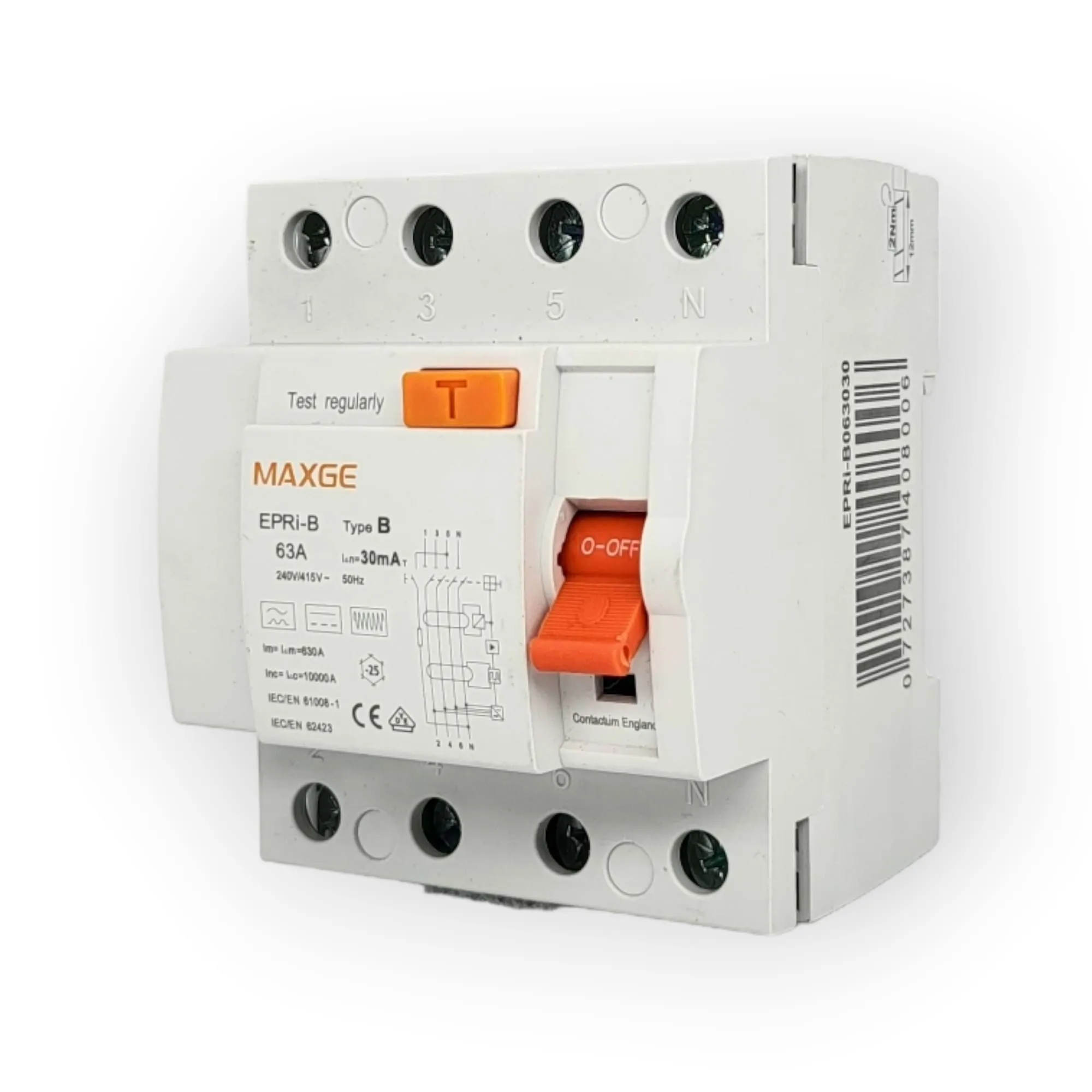
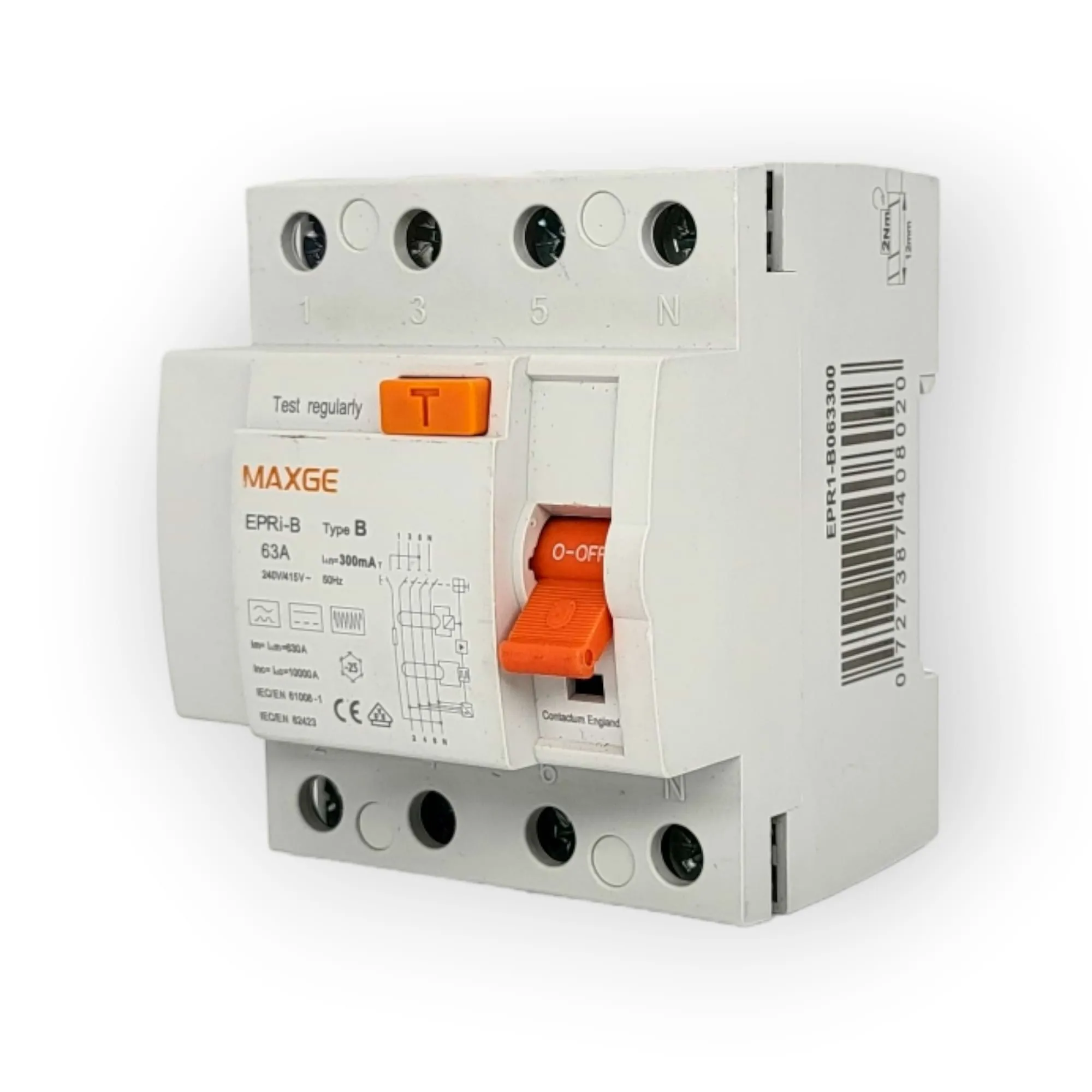
Type B
Buy at B2B prices
0% VAT for EU business customers.
Subscribe to the newsletter to receive the latest discount codes.
5% discount for orders over €5000
Subscribe to the newsletter to receive the latest discount codes.Free shipping to Germany
for orders over €500
Free shipping to Austria, Belgium and Netherlands
for orders over €1000
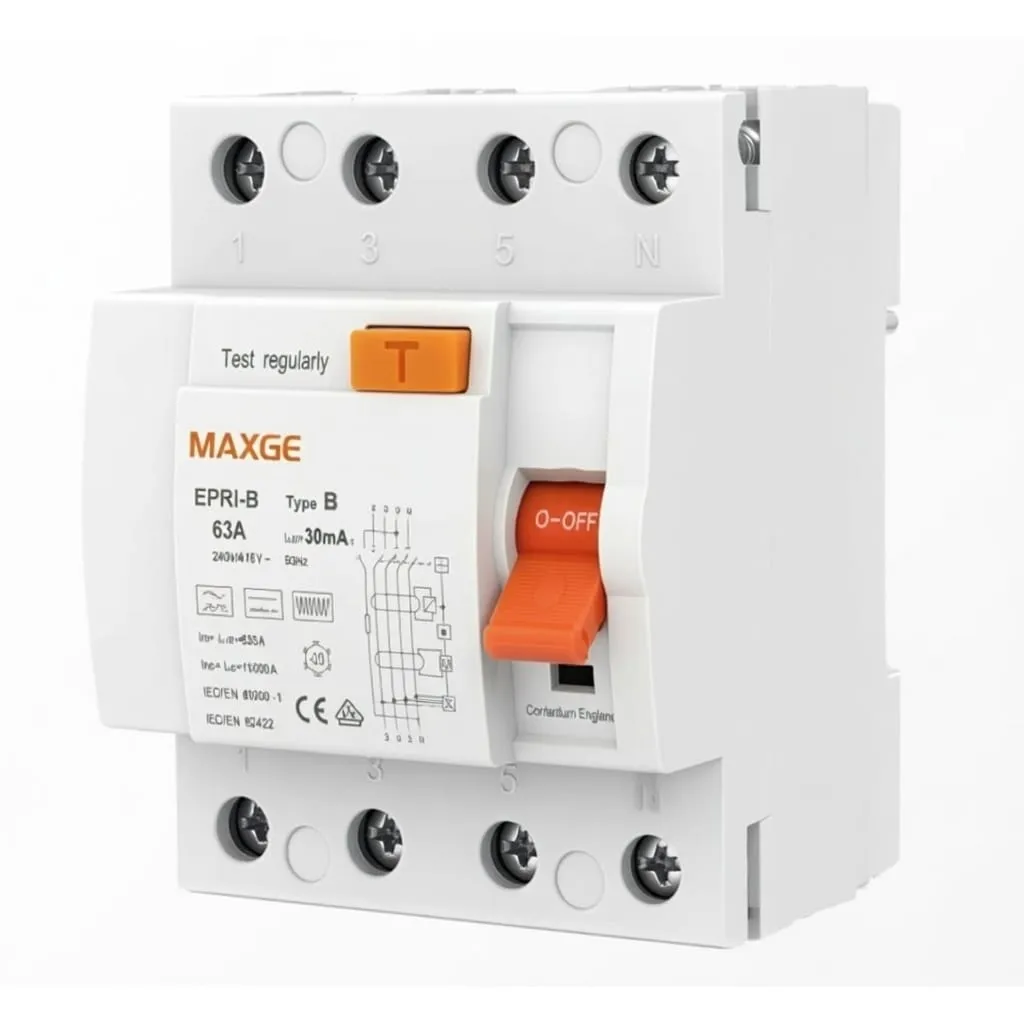
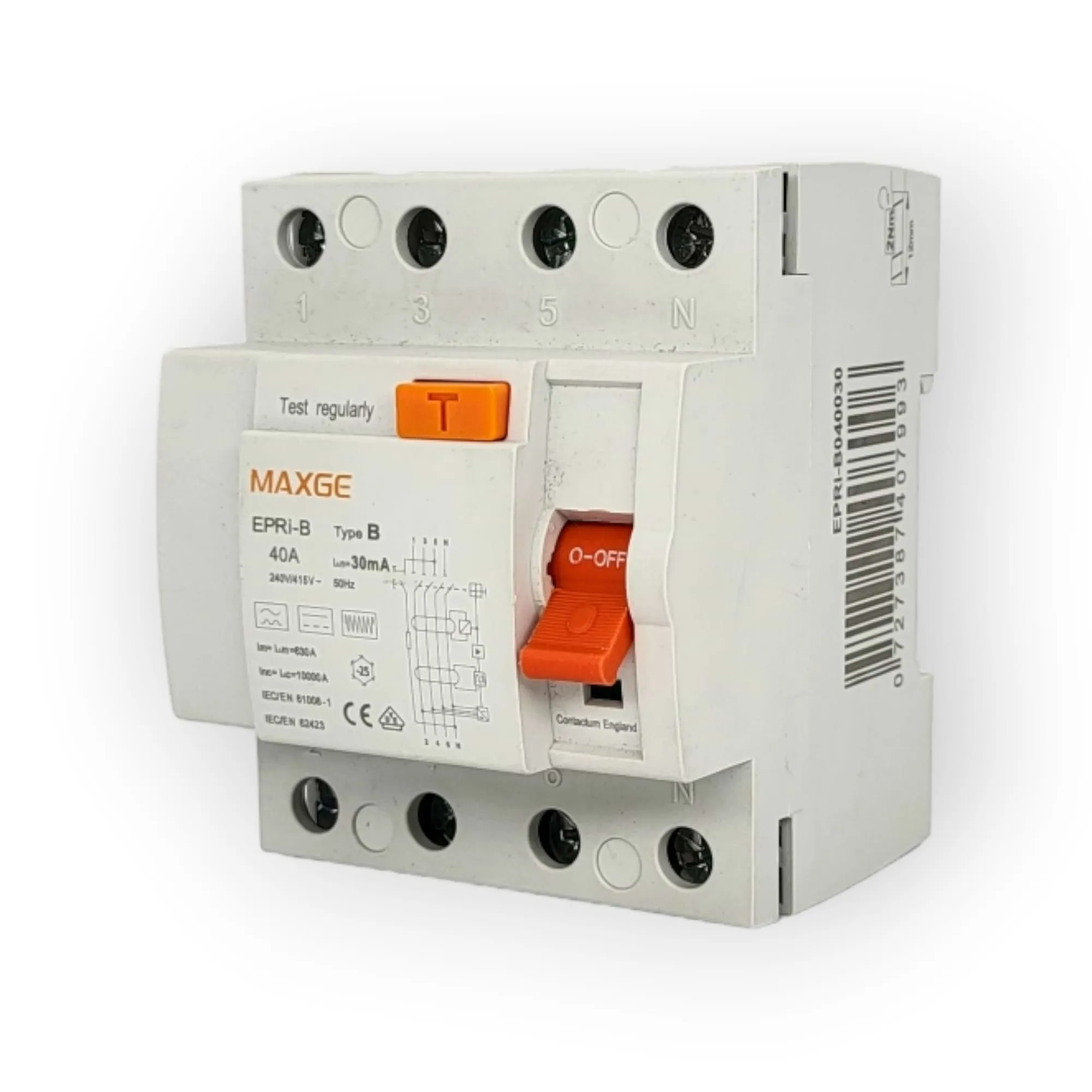
Type B RCD – All-Current Sensitive Residual Current Circuit Breaker for Industrial, PV, EV Charging & Professional Installations
Discover our high-performance Type B RCDs (Residual Current Devices, also known as RCCBs), engineered for comprehensive protection against sinusoidal AC, pulsating DC, and smooth DC residual currents, including high-frequency components up to 1–2 kHz. These all-current sensitive devices provide superior safety in demanding applications where standard Type A or Type F RCDs may fail or “blind.” Ideal for electrical contractors, construction and renovation companies, industrial facilities, research laboratories, van and camper conversions, and professional electricians seeking maximum reliability and full compliance with international standards.
What is a Type B RCD and How Does It Work?
A Type B Residual Current Device is an all-current sensitive RCD compliant with IEC 62423 (supplement to IEC 61008-1). It detects not only AC fault currents and pulsating DC, but also smooth (continuous) DC residual currents and composite high-frequency currents that modern power electronics can generate. This prevents dangerous “blinding” of the device and ensures fast, reliable tripping at 30 mA for personal protection or higher ratings for fire and equipment protection.
Key Technical Advantages for Professionals
Type B RCDs offer high surge current withstand, stable operation in harsh environments, and full compatibility with VFDs, inverters, and power semiconductor equipment. They meet stringent requirements of BS 7671, IEC 60364, and equivalent international regulations, making them the preferred choice for complex modern electrical installations.
Applications of Type B RCDs – Essential Protection for Modern Projects
Type B RCDs are increasingly required in installations involving power electronics, renewable energy, and electric mobility. They deliver enhanced safety and regulatory compliance for:
- Electrical Contractors & Construction/Renovation Companies: Temporary site supplies, distribution boards, and refurbishment projects where inverters or variable loads are present.
- Industrial & Commercial Facilities: Variable Frequency Drives (VFDs), servo motors, pumps, UPS systems, welding equipment, and three-phase rectifier loads.
- Electric Vehicle (EV) Charging Stations: Reliable protection against smooth DC leakage currents from onboard chargers and power electronics in Wallboxes and public charging points.
- Photovoltaic (PV) and Solar Systems: Protection on the AC side of transformerless inverters and battery storage systems that can produce DC residual currents.
- Van, Camper & Mobile Conversions: Inverter-based power systems, solar setups, and battery banks in recreational vehicles and mobile workshops.
- Research Centres & Laboratories: Sensitive electronic equipment, medical devices, and precision instrumentation requiring the highest level of fault protection.
Comparison of RCD Types
| RCD Type | Detected Residual Currents | Typical Applications |
|---|---|---|
| Type AC | Sinusoidal AC only | Basic older installations (rarely recommended today) |
| Type A | AC + pulsating DC (up to 6 mA smooth DC) | Standard domestic and light commercial with electronic devices |
| Type F | Type A + mixed/high-frequency currents (up to 1 kHz) | Heat pumps, single-phase inverters, modern appliances |
| Type B | All above + smooth DC + higher frequencies (up to 1–2 kHz) | PV systems, EV chargers, industrial VFDs, UPS, research labs, van conversions, three-phase rectifiers |
Frequently Asked Questions about Type B RCDs
When should a Type B RCD be used?
Use Type B whenever the installation includes frequency inverters, transformerless PV inverters, EV chargers, UPS systems, or any equipment that can produce smooth DC or high-frequency residual currents. Many manufacturers and standards (IEC, BS 7671, etc.) explicitly recommend or require it to prevent blinding and ensure full protection.
What is the main difference between Type B and Type A RCDs?
Type A detects AC and pulsating DC, but can be blinded by smooth DC currents above ~6 mA. Type B additionally detects smooth (continuous) DC residual currents and higher-frequency components, providing universal protection in modern electronic-heavy environments.
Can a Type B RCD be installed downstream of a Type A RCD?
It is generally not recommended. A upstream Type A device may lose effectiveness due to smooth DC components before the Type B can react. Proper coordination or direct use of Type B is preferred for safety and compliance.
Is a Type B RCD required for EV charging stations?
In most cases yes — especially for installations without a dedicated 6 mA DC residual current monitoring device (RDC-DD). Type B provides comprehensive protection against DC fault currents generated by EV chargers, ensuring compliance with IEC 60364-7-722 and related regulations.
What role do Type B RCDs play in photovoltaic systems?
They protect the AC output side of transformerless solar inverters, which can inject smooth DC residual currents into the grid. Many PV system manufacturers recommend or mandate Type B RCDs for personnel and equipment safety.
Which residual current ratings are common for Type B RCDs?
30 mA is standard for personal protection (e.g., socket circuits, EV chargers). Higher ratings such as 100 mA or 300 mA are used for fire protection or selective upstream protection in industrial and commercial settings.
How often should Type B RCDs be tested?
Follow national regulations and risk assessments (e.g., BS 7671, OSHA-equivalent, or BetrSichV). In commercial and industrial environments, functional testing is typically required every 6 months, with documented results for compliance.
Are Type B RCDs suitable for van and camper van conversions?
Yes. Inverters, solar charge controllers, and battery systems in mobile setups often generate smooth DC leakage. Type B RCDs ensure safe 230 V / 110 V operation and full protection against electric shock in recreational vehicles.
Which standards govern the use of Type B RCDs?
Key standards include IEC 61008-1, IEC 62423, BS 7671 (UK), VDE 0664 / EN 62423 (Europe), and IEC 60364 series for special installations such as EV charging and PV systems.