



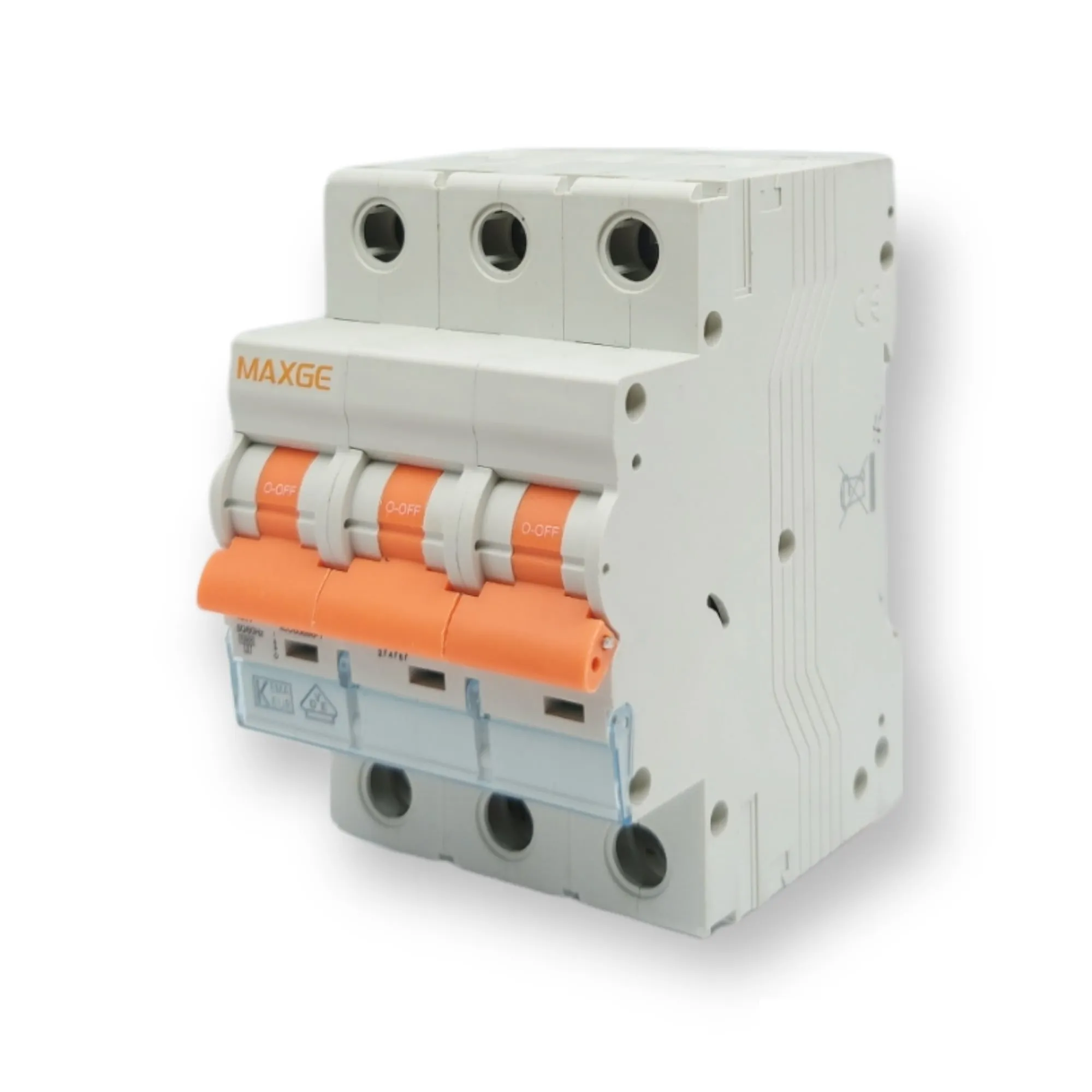
3-pole 10kA
Buy at B2B prices
0% VAT for EU business customers.
Subscribe to the newsletter to receive the latest discount codes.

5% discount for orders over €5000
Subscribe to the newsletter to receive the latest discount codes.Free shipping to Germany
for orders over €500
Free shipping to Austria, Belgium and Netherlands
for orders over €1000
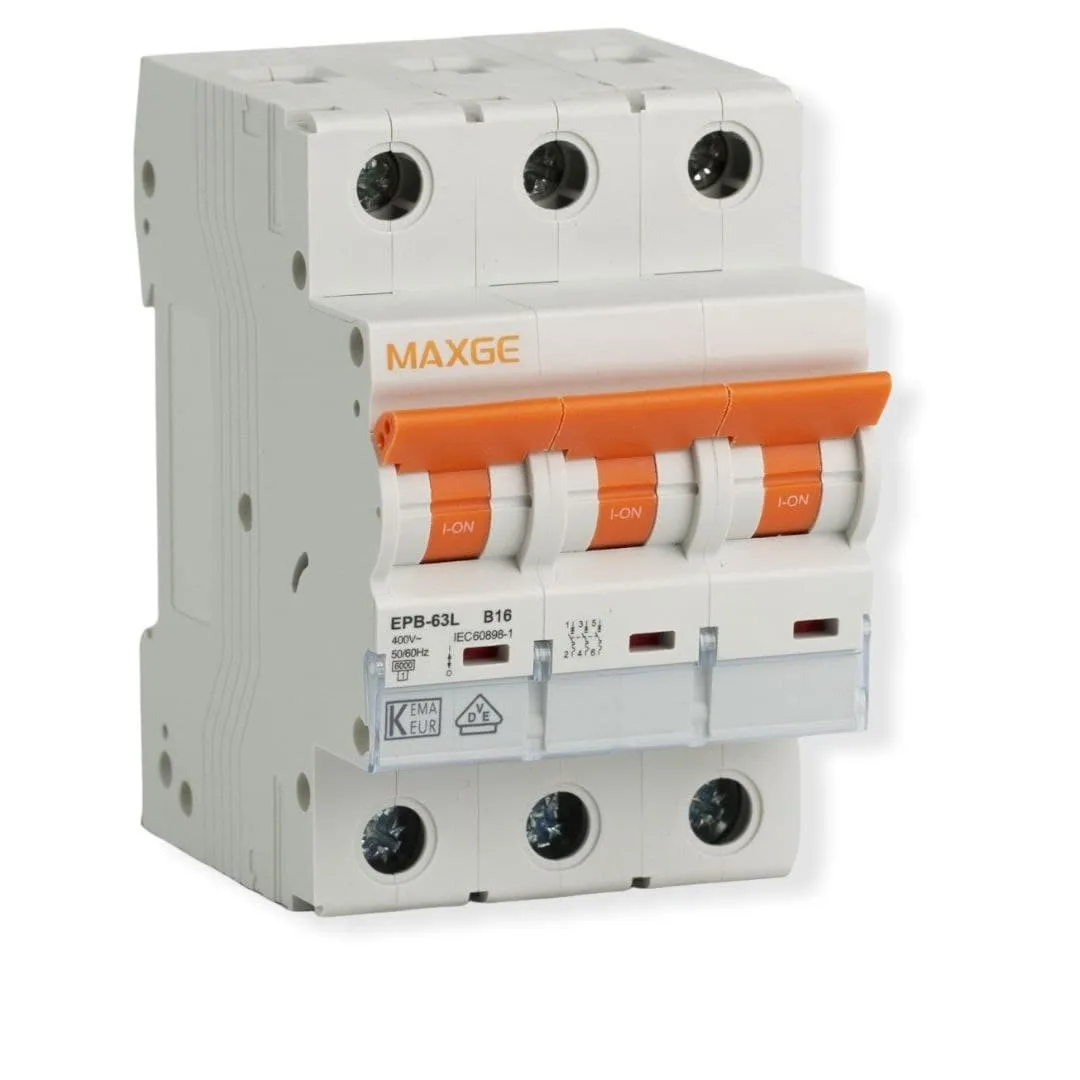
3-Pole Circuit Breakers 10 kA – Professional Miniature Circuit Breakers for Industrial, Commercial and Three-Phase Applications
Discover our high-quality 3-pole miniature circuit breakers (MCBs) with 10 kA breaking capacity. These reliable three-pole circuit breakers provide superior overcurrent and short-circuit protection in 400 V three-phase systems. Certified according to IEC 60898-1 / EN 60898-1, they meet the strictest requirements of professional electricians, electrical contractors, construction companies, renovation firms, industrial facilities, research centers, and van conversion specialists.
Key Advantages of 3-Pole 10 kA Circuit Breakers
With a high breaking capacity of 10 kA, these MCBs safely interrupt even elevated short-circuit currents that frequently occur in commercial and industrial environments. The simultaneous all-pole disconnection of all three phases ensures maximum safety and prevents dangerous phase imbalances. Their robust design and IP20 protection make them ideal for installation in distribution boards and sub-distributions. They minimize downtime and effectively protect valuable machinery, equipment, and cabling.
Applications of 3-Pole 10 kA Miniature Circuit Breakers
3-pole circuit breakers with 10 kA breaking capacity are the preferred choice for protecting three-phase circuits in demanding professional settings. In industry and manufacturing, they safeguard motors, machines, production lines, pumps, and compressors against overload and short circuits – especially where high inrush currents are present.
Construction and renovation companies rely on them for reliable protection of temporary site power distribution boards and new electrical installations in buildings. Research laboratories and test facilities use them to ensure stable power supply for sensitive measuring and testing equipment. In van conversion (camper van / motorhome builds), they provide safe three-phase power distribution for high-power consumers such as air conditioners, chargers, or inverters. Electrical service companies and industrial operators appreciate the enhanced safety and reliability when planning and executing complex electrical installations.
Technical Features and Choosing the Right Trip Characteristic
Our 3-pole 10 kA circuit breakers are available in Type B and Type C trip characteristics. The choice depends on the type of load to be protected:
| Trip Characteristic | Magnetic Trip Range | Typical Applications | Suitable for |
|---|---|---|---|
| Type B | 3–5 × rated current | Lighting, socket outlets, resistive loads, general commercial installations | Residential & commercial buildings, lighting and socket circuits |
| Type C | 5–10 × rated current | Motors, transformers, fluorescent lighting, loads with high inrush current | Industrial applications, machinery, van conversions, pumps and compressors |
Available rated currents range from 10 A to 63 A (depending on model), perfectly matched to your three-phase requirements. The breakers are designed for quick DIN-rail mounting in standard distribution boards and offer tool-free installation.
Frequently Asked Questions about 3-Pole 10 kA Circuit Breakers
What does the 10 kA breaking capacity mean for a circuit breaker?
The 10 kA breaking capacity indicates the maximum short-circuit current the MCB can safely interrupt without being damaged. Compared to 6 kA versions, 10 kA breakers offer a higher safety margin and are particularly recommended for commercial, industrial, or installations near powerful transformers where higher prospective fault currents can occur.
When should a 3-pole circuit breaker be used instead of a 1-pole breaker?
3-pole miniature circuit breakers are required whenever three-phase (400 V) loads such as motors, three-phase machinery, or larger equipment need protection. They disconnect all three phases simultaneously, preventing dangerous voltage imbalances or continued operation on only two phases.
Which trip characteristic (B or C) is suitable for motors in industrial applications?
For motors and devices with high inrush currents, Type C is recommended. It tolerates short-term current peaks better and prevents nuisance tripping. Type B is more suitable for resistive loads such as lighting or socket circuits.
Are 3-pole 10 kA circuit breakers suitable for construction sites and renovation projects?
Yes. Thanks to their high breaking capacity and robust construction, they are ideal for temporary site distribution boards and mobile power solutions on construction sites or during renovation work.
Can 3-pole 10 kA circuit breakers be used in van conversion projects?
Yes. In camper van or motorhome conversions with three-phase power systems (for example for powerful air conditioning, chargers, or workshop equipment), they provide reliable protection and meet the requirements for mobile electrical installations.
What standards and certifications do these circuit breakers comply with?
All models are VDE-tested and conform to IEC/EN 60898-1. They are approved for use in residential, commercial, and industrial installations and fulfill current international safety regulations for low-voltage switchgear.
What is the practical difference between 6 kA and 10 kA circuit breakers?
10 kA breakers provide a greater safety reserve in environments with higher prospective short-circuit currents, such as industrial plants or commercial buildings with strong power supplies. While 6 kA is often sufficient for standard residential installations, professional electricians frequently specify 10 kA for commercial and industrial projects to increase overall system safety and reduce the risk of failure.
What additional protective measures are recommended when installing these breakers?
Combine 3-pole circuit breakers with residual current devices (RCDs / RCCBs) or surge protection devices where required. Always ensure correct sizing of the rated current and adequate ventilation in the enclosure. Installation must be carried out by qualified electricians in accordance with applicable national regulations and standards.