





Cable Trays and Cable Ladders Buyer's Guide, Comparison
Cable trays and cable ladders are essential components for safe, organized, and professional cable management in industrial, commercial, and large-scale buildings. This comprehensive pillar guide serves as a detailed buyer’s guide and comparison to help you make the right decision.
What Are Cable Trays and Cable Ladders?
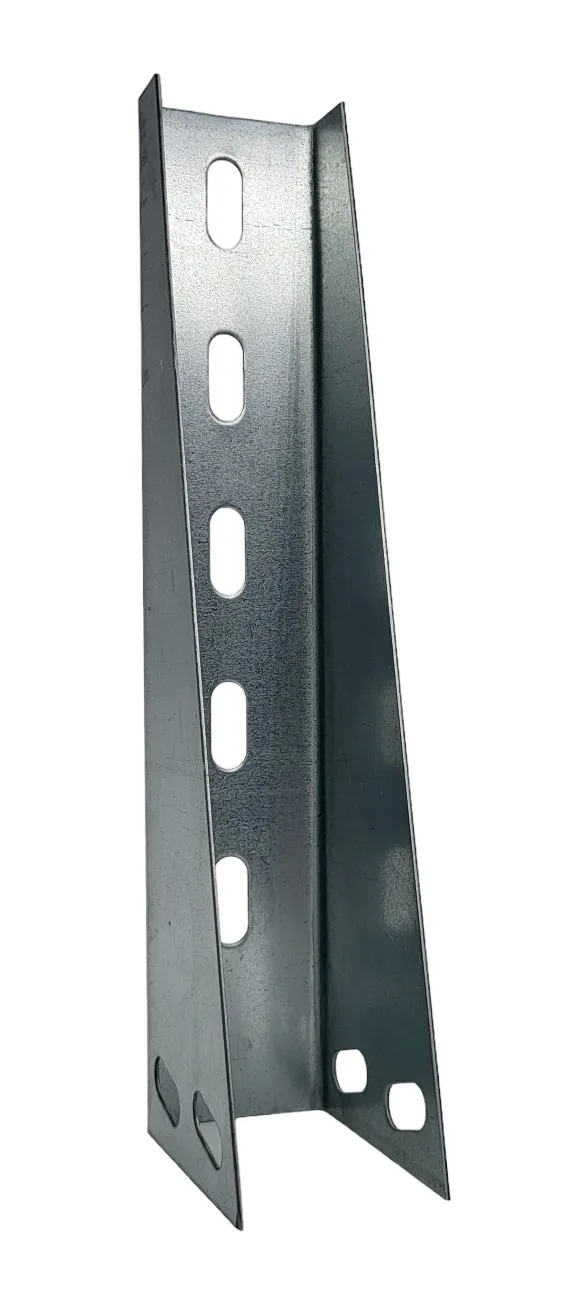
Cable Trays are U-shaped cable support systems made of galvanized steel sheet, designed to carry power, data, and communication cables in an open or covered manner. They provide neat, accessible, and maintenance-friendly cable routing.
Cable Ladders (also called cable trays systems) refer to the complete routing solution – including straight tray sections, fittings (bends, tees, crosses), connectors, and mounting accessories.
Explore the full range: Browse All Cable Trays
Advantages of Cable Trays and Cable Ladders
- High load-bearing capacity for large cable volumes
- Excellent accessibility for maintenance and future expansions
- Superior cable ventilation and reduced heat buildup
- Flexible planning for complex routing paths
- Excellent corrosion protection through hot-dip galvanization
- Good fire protection properties
Types of Cable Trays and Essential Accessories
Cable trays are available in various heights, widths, and finishes – from sendzimir galvanized to hot-dip galvanized for outdoor use.
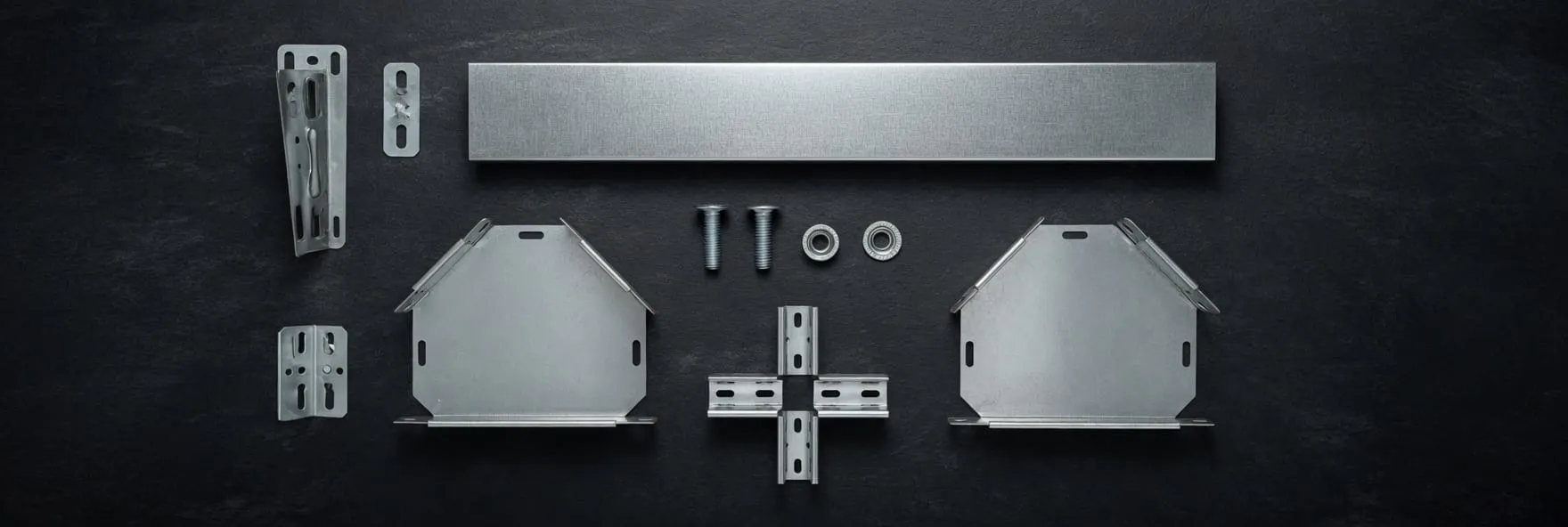
Important components and fittings:
- Hanger Brackets – for suspended ceiling installation
- Cable Trays & Lids – with covers for additional protection
- Connectors – for secure longitudinal connections
- 90° Bends – for directional changes
- T-Pieces – for branch-offs
- Wall Brackets – for wall mounting
- Crosses – for crossing cable routes
Cable Tray vs Cable Ladder vs Wire Mesh Tray: Comparison
| Criteria | Cable Tray (Solid U-Shape) | Cable Tray System | Cable Ladder | Wire Mesh Tray |
|---|---|---|---|---|
| Dirt Protection | High | High | Medium | Low |
| Ventilation | Medium | Medium | Very High | High |
| Load Capacity | High | High | Very High | Medium to High |
| Installation Effort | Medium | High | Medium | Low |
| Accessibility | High | High | Very High | Very High |
| Typical Application | Industry, Indoor | Complex Installations | Heavy Loads, Outdoor | Data Cables, Data Centers |
Key Selection Criteria
- Load Capacity & Span – Based on total cable weight and support distance
- Environmental Conditions – Moisture, chemicals, or outdoor use require hot-dip galvanized trays
- Cable Type & Quantity – Power, data, or mixed installations
- Mounting Method – Wall, ceiling, suspended, or floor
- Compliance – DIN EN 61537 and relevant VDE standards
- Future Expandability – Availability of fittings and accessories
View Complete Cable Tray Range
Common Applications
- Industrial halls and production facilities
- Office and commercial buildings
- Data centers and server rooms
- Infrastructure projects (tunnels, bridges)
- Power and data cabling in large buildings
Installation & Planning Tips
Always plan 30–50% reserve capacity. Follow manufacturer guidelines for support spacing and ensure proper earthing throughout the system. Document the cable route for future maintenance.
Frequently Asked Questions (FAQ)
What is the difference between a cable tray and a cable ladder?
A cable tray is the individual U-shaped section. A cable ladder (or cable tray system) refers to the complete installed solution including all fittings and supports.
Which cable tray is suitable for outdoor use?
Hot-dip galvanized (tauchverzinkt) cable trays offer the best corrosion protection for outdoor applications.
Do cable trays always need lids?
Lids are recommended in dusty environments or where extra mechanical protection is required. In clean indoor industrial settings, open trays are commonly used.
How do I calculate the required width of a cable tray?
Sum the outer diameters of all cables and apply a fill factor of 40–60% according to applicable standards.
Are cable trays suitable for data cables?
Yes. Perforated trays or wire mesh trays provide excellent ventilation and help reduce electromagnetic interference.
How do you properly connect cable trays?
Use dedicated connectors and screws. A stable mechanical joint and continuous earthing are essential.
Can cable tray systems be expanded later?
Yes. This is one of the biggest advantages. Fittings such as tees, bends, and crosses allow flexible modifications.
Which standard applies to cable trays?
The key international standard is DIN EN 61537 for cable tray systems, along with relevant fire protection and electrical regulations.
Last updated: May 2026