



Best CEE Extension Cables for Construction Sites – 16A vs 32A
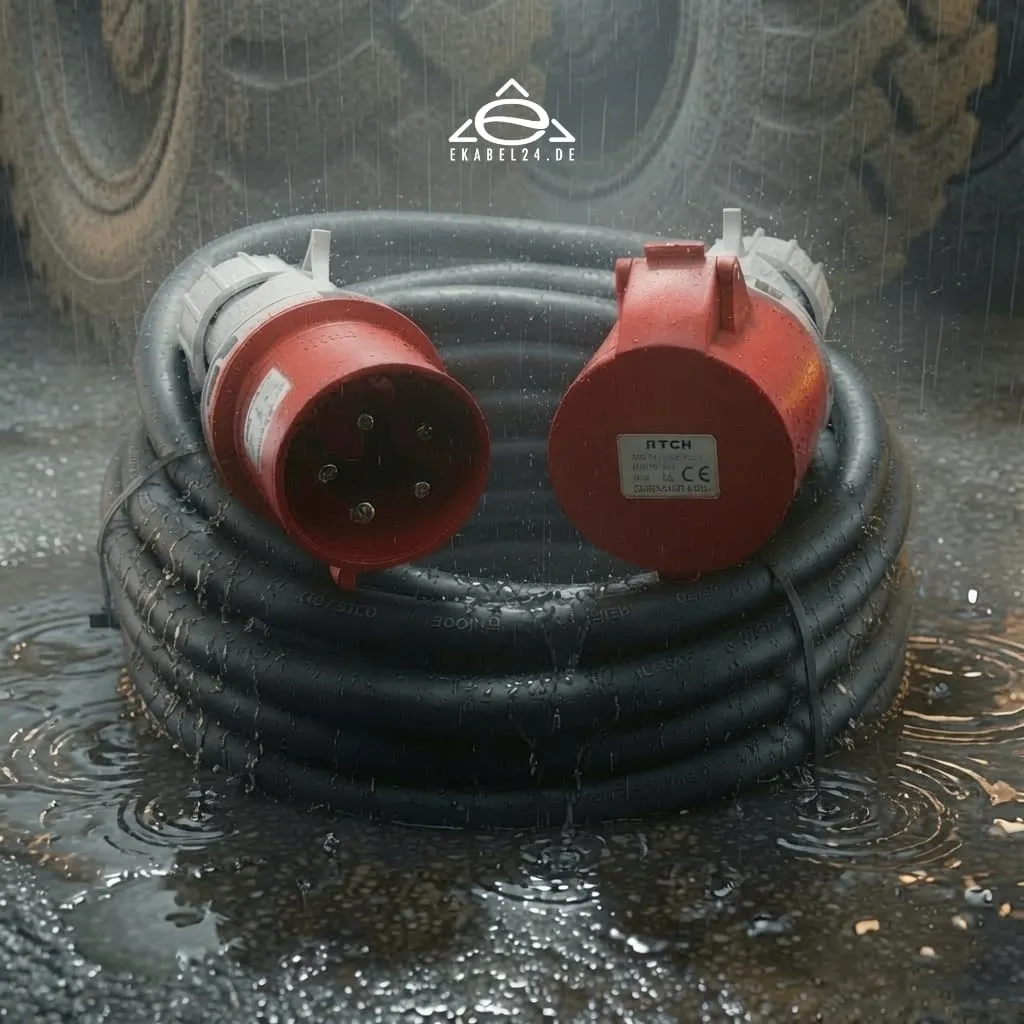
For site managers, electricians, and construction professionals: Reliable power supply is critical on every construction site. CEE extension cables with H07RN-F rubber cable are the industry standard for tough outdoor use. This comprehensive guide compares 16A and 32A versions, examines voltage drop, protection ratings, and recommends optimal lengths for your projects.
Whether you’re searching for H07RN-F CEE extension cable for construction sites, the best rubber cable for outdoor use, or durable heavy-duty power cables – here you’ll find practical recommendations focused on safety, load capacity, and longevity.
Why CEE Extension Cables Are Essential on Construction Sites
Modern construction sites run multiple high-power tools simultaneously: concrete mixers, plastering machines, circular saws, lighting, and more. Standard Schuko extensions are often insufficient. H07RN-F CEE extension cables deliver the necessary 400V three-phase power and are built for harsh conditions.
- High mechanical resistance against abrasion, crushing, and tension
- Weatherproof: UV, ozone, and oil resistant
- Flexible even at low temperatures down to -25°C
- Standardised red 5-pin CEE plugs for safe connections
16A vs 32A CEE Cables: Direct Comparison
| Criteria | 16A CEE (5G2.5) | 32A CEE (5G4 / 5G6) |
|---|---|---|
| Max. Power (approx.) | 11 kW | 22 kW |
| Typical Applications | Lighting, smaller machines, power tools | Large plastering machines, mixers, multiple heavy loads |
| Cable Cross-Section | 5 x 2.5 mm² | 5 x 4 mm² or 5 x 6 mm² |
| Weight per Meter | Lighter | Heavier and more robust |
| Voltage Drop over Distance | Higher on long runs | Better under high load and distance |
The right choice depends on your equipment. For demanding construction sites, we recommend 32A variants.
H07RN-F Rubber Cable: Best Choice for Outdoor Use
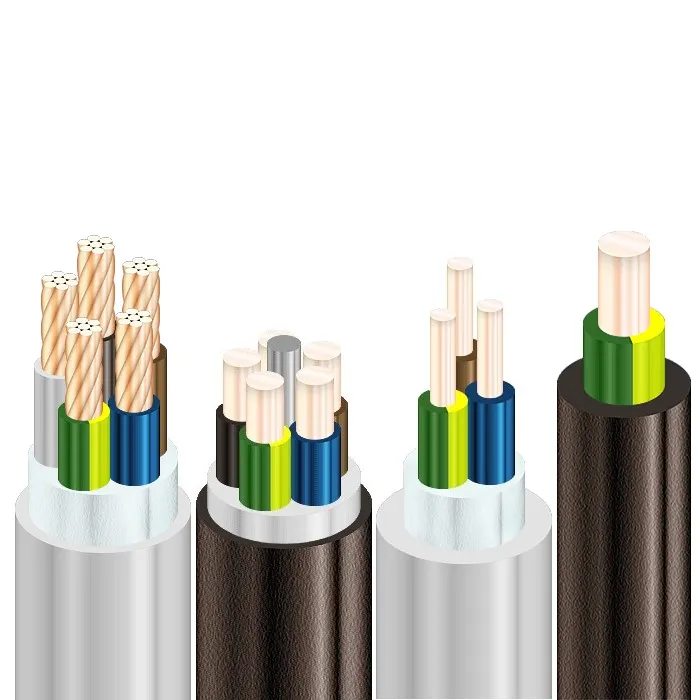
The best rubber cable for outdoor use is the harmonised H07RN-F. It excels with:
- Heavy-duty design for medium to high mechanical stress
- Oil and chemical resistant
- Excellent flexibility
- IP44 or IP67 protection depending on plugs/couplings
Learn more about H07RN-F rubber cables →
IP44 vs IP67: Protection Rating in Real Use
IP44: Protected against solid objects >1mm and splashing water from all directions. Suitable for most construction sites.
IP67: Dust-tight and protected against temporary immersion. Ideal for extremely wet or dusty environments.
In real-world tests, IP67 performs better in muddy or heavy rain conditions, while IP44 is sufficient for standard use.
Voltage Drop Over Distance: Real Test Results
Voltage drop is a critical factor. Long cables under heavy load cause voltage to decrease – leading to overheating or failure to start machines.
| Length | 16A (5G2.5) at Full Load | 32A (5G6) at Full Load |
|---|---|---|
| 10m | Approx. 1-2% drop | Under 1% |
| 25m | Approx. 3-4% drop | 1.5-2.5% |
| 50m | Up to 7% drop (critical) | 3-4% |
Recommended maximum lengths: 25-30m for 16A, up to 50m for 32A under heavy load.
Recommended Lengths and Products for Construction Sites
Our top recommendations from the range:
- 5G2.5 16A CEE Extension Cables – Ideal for medium loads, available in lengths from 10m to 50m
- 5G4 / 5G6 32A CEE Cables – Best for heavy machinery and long distances
Practical Tips for Safe Use
- Always check phase rotation with a phase inverter
- Never kink or drive over the cables
- Perform regular visual inspections for damage
- For longer distances, use multiple shorter cables instead of one very long one
- Ensure CEE plugs are fully inserted and protective covers are used
FAQ – Frequently Asked Questions about CEE Extension Cables
Which CEE cable is better for construction sites: 16A or 32A?
32A for high power demands and long runs. 16A is sufficient for smaller to medium applications.
What does H07RN-F mean?
Harmonised heavy-duty rubber cable for outdoor use (H = harmonised, 07 = 450/750V, R = rubber insulation, N = neoprene sheath, F = flexible).
How long can a CEE extension cable be?
Up to 50m is common in practice. For longer distances, always consider voltage drop and proper fusing.
IP44 or IP67 – Which do I need?
IP44 for standard construction sites. IP67 for heavy rain, mud, or high dust levels.
Are these cables suitable for continuous use?
Yes, H07RN-F cables are designed for professional, long-term use on construction sites.