



Circuit breakers
Buy at B2B prices
0% VAT for EU business customers.
Subscribe to the newsletter to receive the latest discount codes.

5% discount for orders over €5000
Abonnieren Sie den Newsletter, um den Code zu erhalten.
Free shipping to Germany
for orders over €500
Free shipping to Austria
for orders over €1000
Circuit Breakers (MCB) & RCBOs: B10 to C40, Type A & Type B RCDs – Professional Overload and Short-Circuit Protection
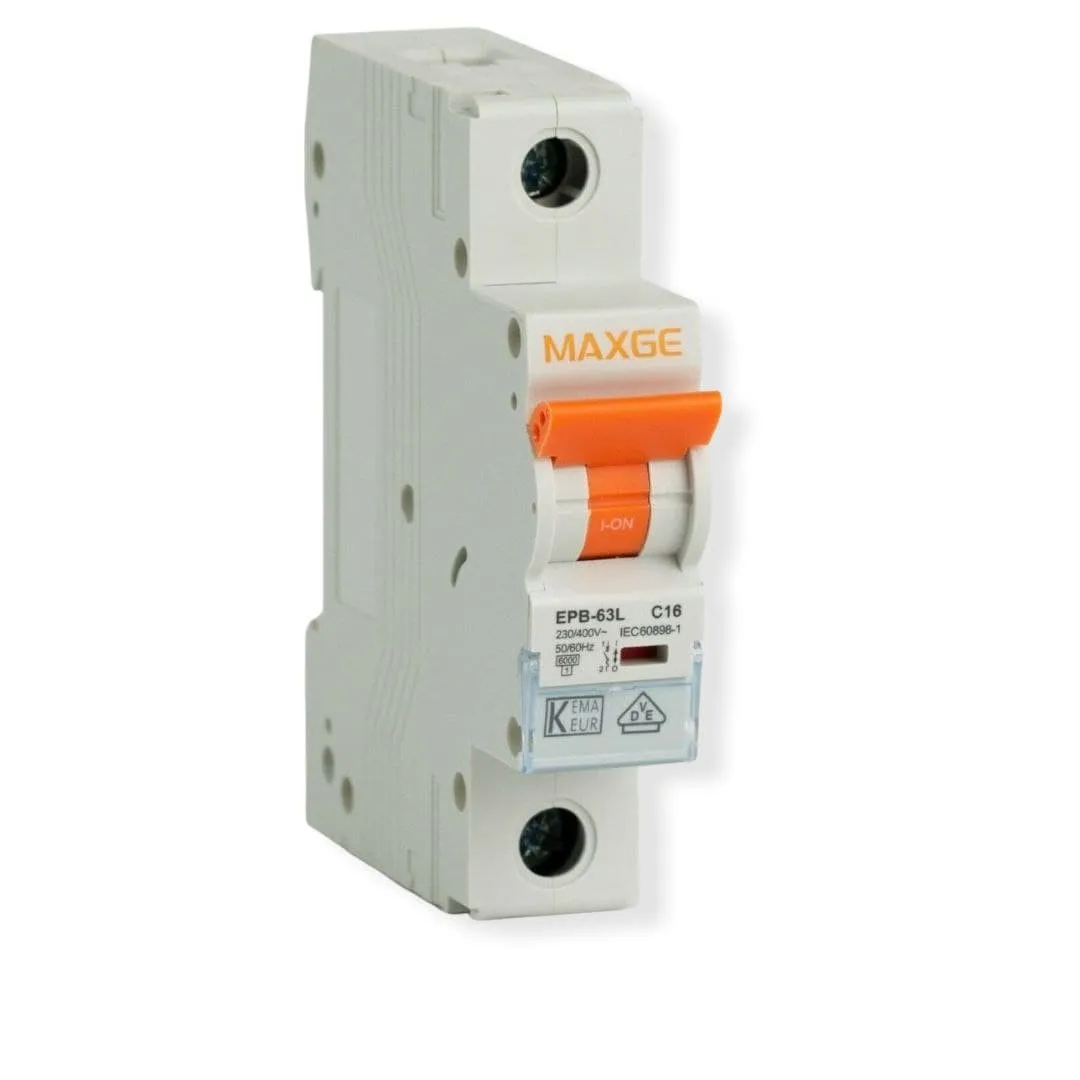
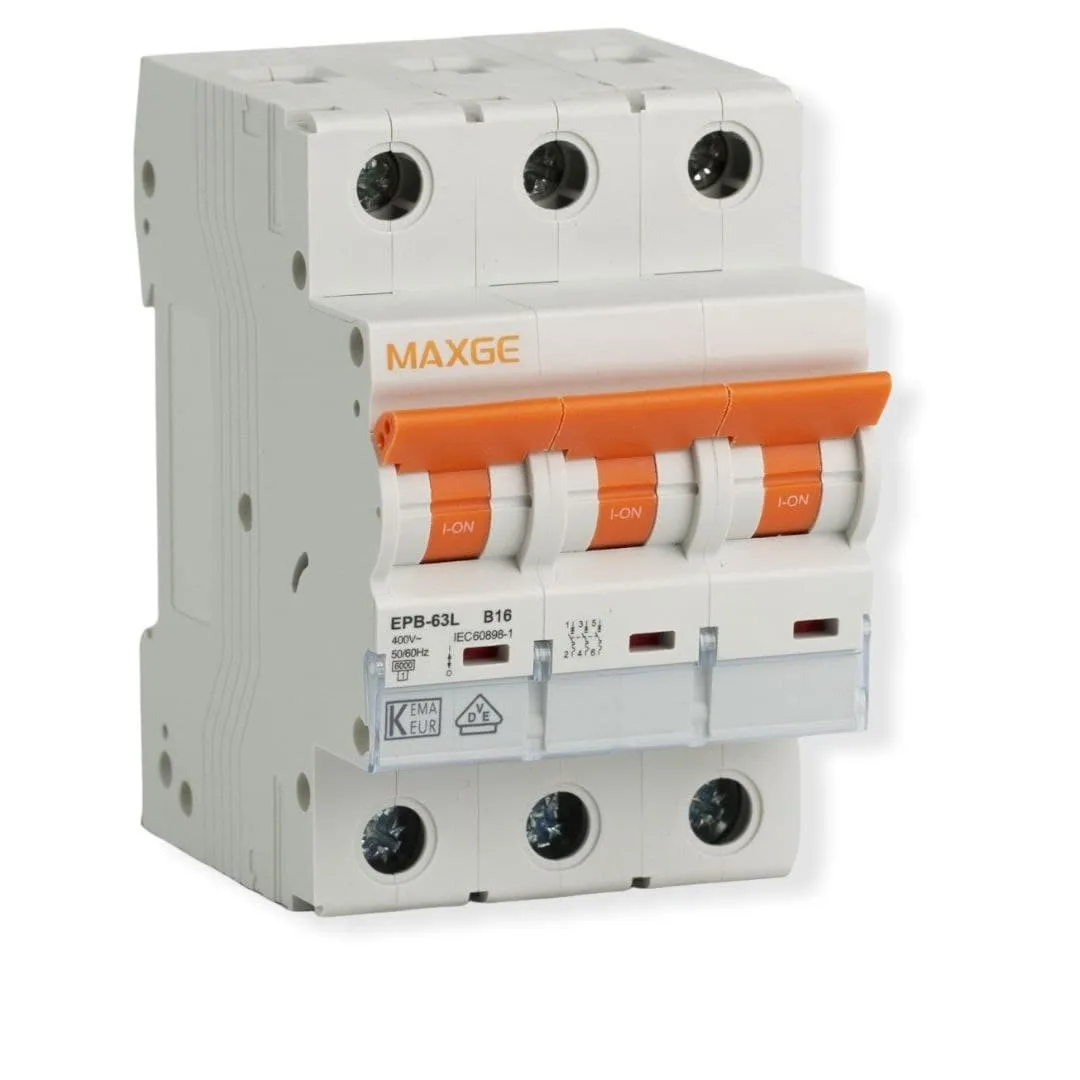
Discover high-quality Miniature Circuit Breakers (MCB), also known as circuit breakers or LS switches, designed for reliable protection of low-voltage electrical installations. These essential devices automatically disconnect circuits in the event of overload or short circuit, preventing damage to wiring, equipment, and ensuring safety for people.
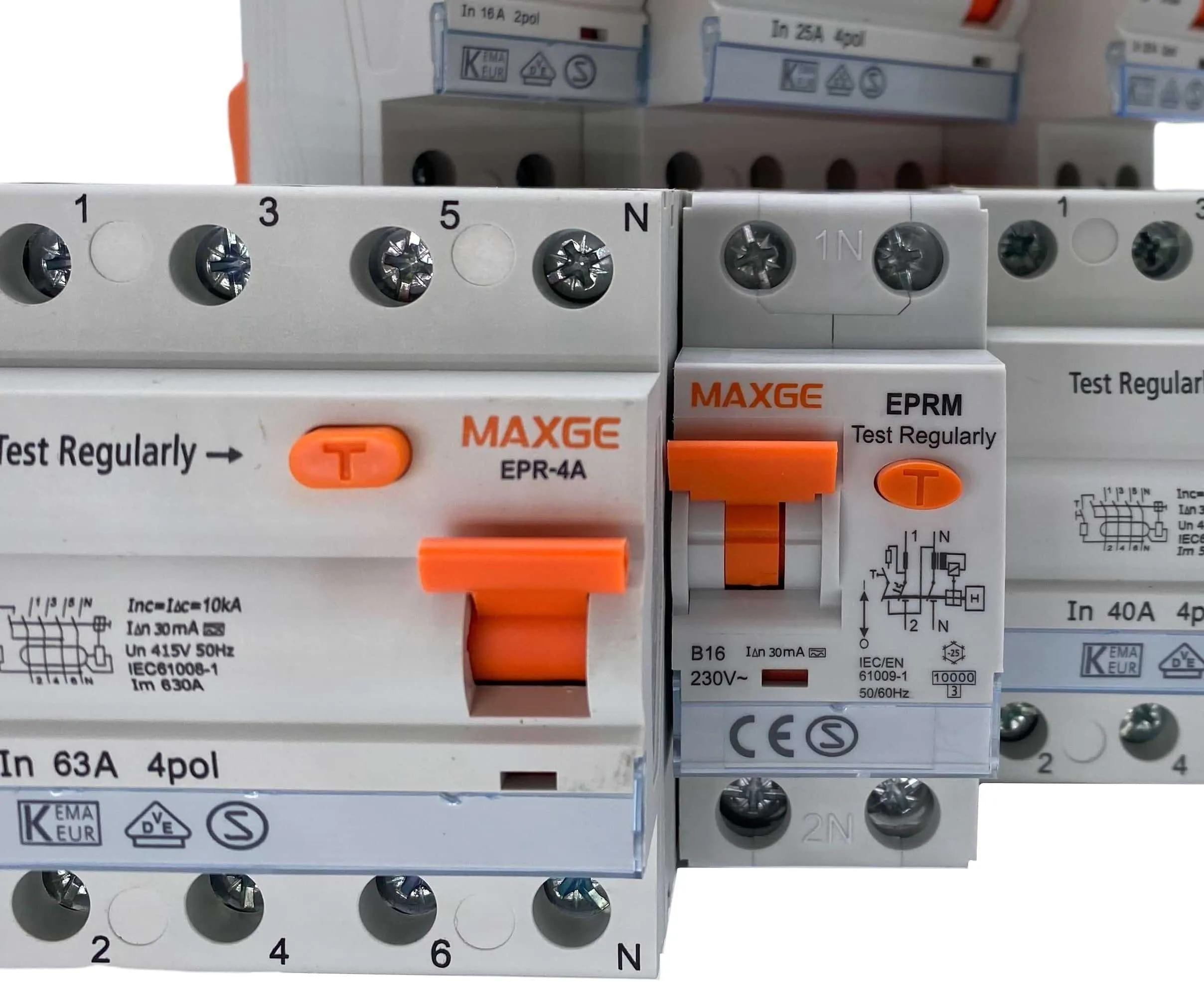
Unlike traditional fuses, MCBs are reusable and offer excellent reliability. At Ekabel24.de we stock a wide range of MCBs with B and C tripping characteristics (from 10 A to 40 A) as well as Residual Current Devices (RCDs / RCCBs) Type A and Type B. We also offer compact RCBOs (Residual Current Breaker with Overcurrent protection) that combine MCB and RCD functionality in a single module – ideal for space-saving installations.
How MCBs Work
MCBs use a thermal bimetal for overload protection and an electromagnetic trip mechanism for instantaneous short-circuit protection. They comply with IEC/EN 60898-1 and provide high breaking capacity (typically up to 10 kA). The choice of tripping curve (B or C) ensures optimal selectivity and prevents nuisance tripping in different applications.
Applications: Where Professional Electricians, Contractors and Businesses Use MCBs and RCBOs
Modern electrical installations demand tailored protection. Our MCBs and RCDs are trusted by electrical service companies, construction firms, renovation contractors, industrial plants, research facilities, and van conversion specialists.
- Construction & New Builds: Protecting temporary site supplies, distribution boards, and final circuits against overload from power tools and heavy equipment.
- Electrical Contractors & Service Companies: Upgrading consumer units, ensuring selective coordination, and meeting current safety standards in residential and commercial projects.
- Renovation & Refurbishment: Replacing outdated fuse boxes during building modernisations while integrating modern RCD protection.
- Industrial & Commercial Installations: Safeguarding motors, machinery, and production lines with higher inrush currents (C-curve recommended).
- Van Conversion & Mobile Solutions: Secure 230 V AC systems in campervans, motorhomes, and commercial vehicles. Compact MCBs and RCBOs protect inverters, solar setups, and onboard circuits in mobile environments.
- Research Centres & Laboratories: Precise protection of sensitive test equipment. Type B RCDs are essential where frequency inverters, electronic devices, or DC components may produce smooth residual currents.
Correct selection and installation of MCBs and RCBOs significantly increases system availability and reduces downtime for professional users.
Tripping Characteristics Overview
| Characteristic | Instantaneous Trip Range | Typical Applications | Common Ratings |
|---|---|---|---|
| B | 3–5 × In | Lighting, socket outlets, resistive loads in residential and office buildings | B10, B16, B20, B25, B32, B40 |
| C | 5–10 × In | Small motors, transformers, mixed loads with moderate inrush currents (commercial & light industrial) | C10, C16, C20, C25, C32, C40 |
| D (on request) | 10–20 × In | Large motors, heavy inductive loads, welding equipment | D10–D40 |
RCDs Type A and Type B: Essential Personnel and Fire Protection
Residual Current Devices (RCDs) provide additional protection against earth fault currents that MCBs alone cannot detect. They are mandatory in many applications according to IEC 60364 / BS 7671.
- Type A (pulsating DC sensitive): Detects sinusoidal AC and pulsating DC residual currents. Suitable for most household and commercial installations (washing machines, electronics, LED lighting).
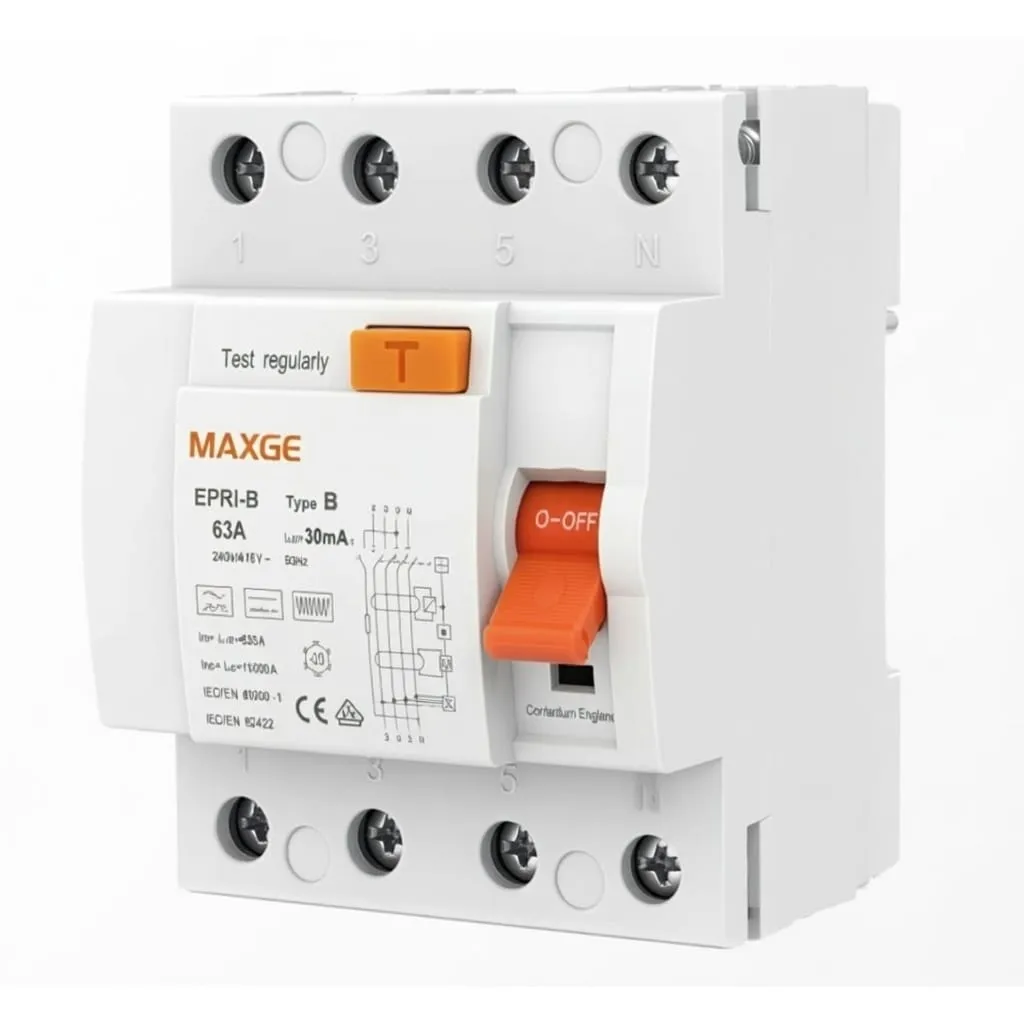
- Type B (all-current sensitive): Also detects smooth DC residual currents. Required for PV inverters, EV charging stations (wallboxes), frequency converters, medical equipment, and modern industrial drives.
RCBOs combine MCB and RCD protection in one compact unit, reducing wiring effort and saving space in distribution boards – especially useful in industrial panels and van conversions.
Frequently Asked Questions (FAQ) about MCBs, RCBOs and RCDs
What is the difference between an MCB and an RCBO?
An MCB protects against overload and short circuit. An RCBO adds earth leakage (residual current) protection, combining the functions of an MCB and an RCD in a single device.
Which tripping characteristic should I choose?
Use B-curve for standard lighting and socket circuits. Choose C-curve for motors or loads with higher starting currents. D-curve is for very high inrush applications (e.g., large industrial motors).
When do I need a Type B RCD instead of Type A?
Type B is required wherever smooth DC residual currents can occur – for example with solar PV systems, electric vehicle chargers, frequency inverters, or certain medical/industrial electronics.
Are MCBs and RCBOs suitable for van conversions?
Yes. Compact single- or double-pole devices are vibration-resistant and space-saving, making them ideal for protecting 230 V AC systems in campervans and mobile setups.
How do I select the correct rated current (e.g. B16 or C32)?
The rating depends on cable cross-section, expected load, and installation method. Always follow applicable standards (e.g., IEC 60364) and have the design verified by a qualified electrician.
What are the advantages of RCBOs?
RCBOs save space, simplify wiring, and allow individual circuit protection with both overcurrent and residual current detection – perfect for modern, selective installations.
Do research centres and laboratories have special requirements?
Yes. High selectivity and Type B RCDs are often necessary to protect sensitive measuring equipment while maintaining maximum personnel safety.
How long do quality MCBs last?
With correct sizing and periodic testing according to standards, high-quality MCBs and RCBOs can operate reliably for decades.
Why is professional selection of circuit protection important for construction and renovation projects?
Proper protection prevents costly damage, ensures compliance during inspections, and delivers long-term operational safety – a key quality factor in any build or refurbishment.